


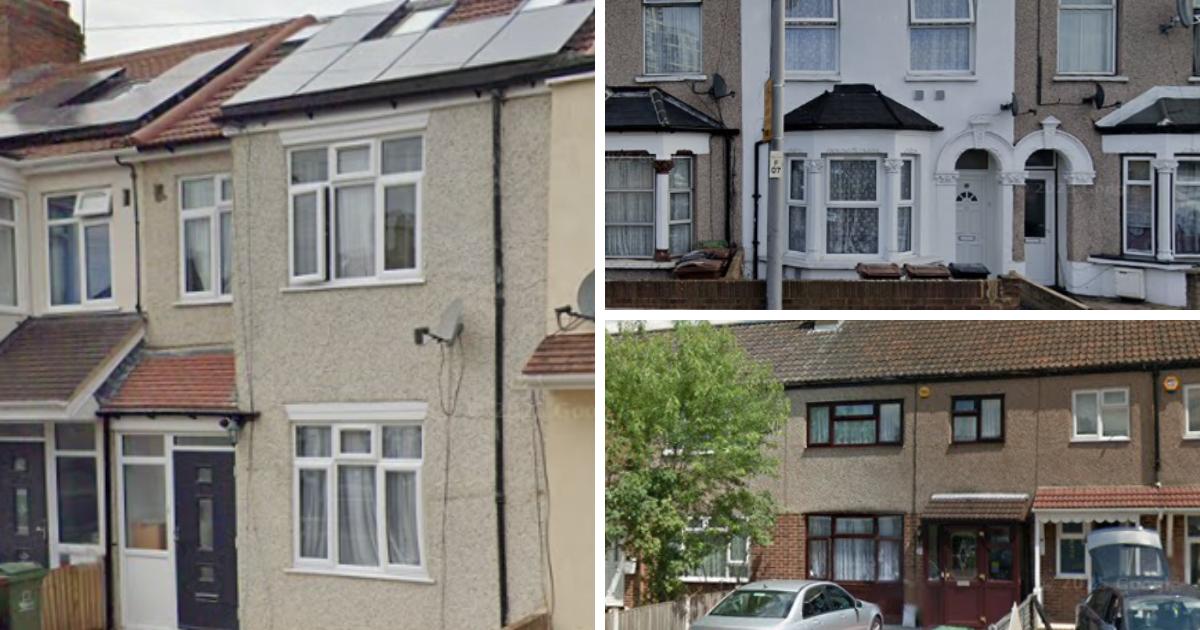
Between November 28 and December 5 two planned HMOs in Barking and one in Dagenham were rejected by the planning authority.
On November 28, an application submitted by Kashif Rahman was refused for the change of use of the home at 8 Fanshawe Avenue in Barking to an HMO.

On Barking and Dagenham Council’s public planning page, the application is listed as one for a lawful development certificate, however on a planning document it is described as a retrospective planning application for works that have already been carried out.
The officer report notes that for a certificate to be granted, there must be evidence that the property was used as an HMO for at least ten years prior to the date of the application.
The application form states that the use only commenced in April 2016, therefore not reaching this threshold.
On December 5, plans for the change of use of the property at 48 Bradfield Drive in Barking were refused.

The proposal, submitted by Zaheer Ahmed, sought to turn the two-storey, mid-terraced family home into an HMO for six people.
A planning statement argued the plans “maintain the residential character of the area” and provides “high-quality, managed accommodation”.
However, the planning authority said: “The proposal would result in the loss of this unit as a single-family home and is therefore contrary to local policies that seek to safeguard family housing, which remains in demonstrable need across the borough.”
Also refused on December 5 was a proposal for the retrospective change of use of a home at 21 Ross Avenue in Dagenham to an HMO.

Plans were also put forward by applicant Helen Odejimi for the installation of an electric vehicle charging point, car parking space and refuse and cycle storage space.
A planning statement detailed the HMO would house three to six residents.
Similarly to the reasoning behind the refusal of the HMO in Bradfield Drive, the officer report said the proposal would result in “the loss of a larger family sized dwellinghouse (five-bedroom dwelling)” and goes against policies which seek to protect family sized housing.
The application also “failed to provide information which identifies that there is a need for this type of dwelling within this location”.
Officers also noted that there would likely “increased generation of waste, noise and irregular comings and goings to the one dwellinghouse” resulting in a “greater level of disturbance to neighbouring properties”.
The report added: “As such the proposal is considered to pose a greater level of disturbance to neighbouring properties and may have a detrimental impact to their standard of living.”