


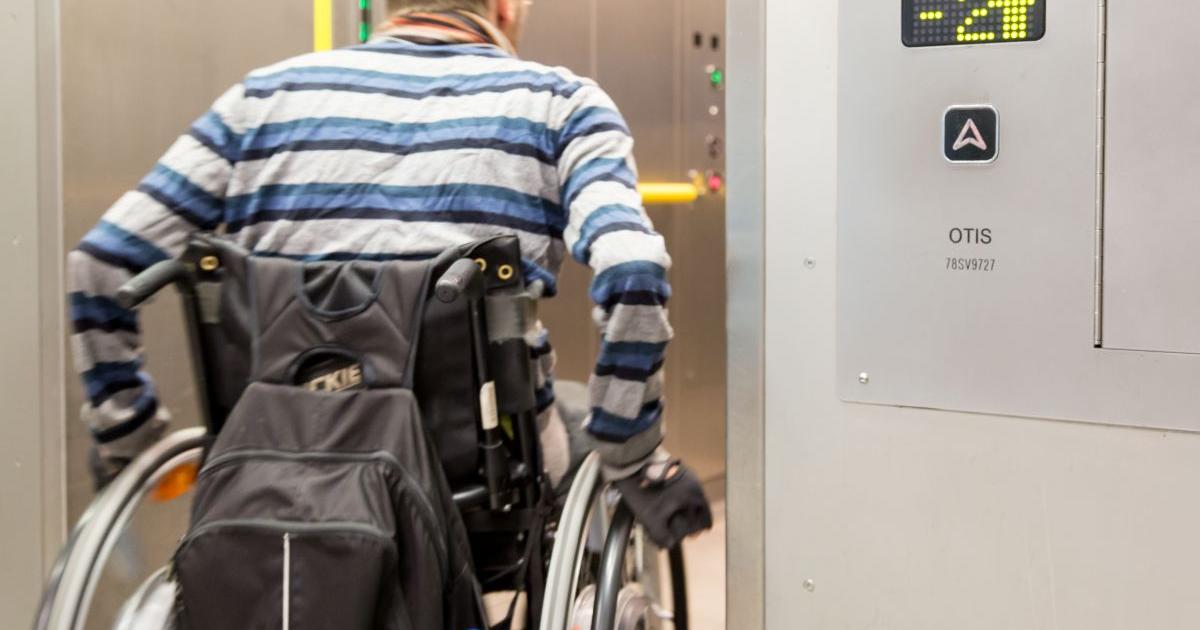
Through new technology, real-time updates are sent to journey planning tools, including the free TfL Go app and Journey Planner.
It is hoped that this will prevent disruption and delays, allowing people with step-free access needs to plan their journeys more effectively.
Step-free access is crucial for many of TfL’s customers, including some disabled people, those carrying luggage and people with prams and pushchairs.
93 lifts at 28 Tube stations now self-report as out of service without needing to be reported by station staff, allowing staff to seek assistance and get the lifts back into operation sooner.
The project is in its first phase, which is focusing on busy central London interchange Tube stations, including Bond Street, London Bridge and Tottenham Court Road, and end of the line stations such as Cockfosters and Morden.
Self-reporting lifts are in operation at the following London Underground stations: Acton Town, Battersea Power Station, Belsize Park, Bond Street, Borough, Caledonian Road, Chalk Farm, Cockfosters, Covent Garden, Edgware, Farringdon, Finchley Central, Goodge Street, Green Park, Hampstead, Kennington, Kilburn, Kingsbury, London Bridge, Morden, Nine Elms, North Greenwich, Osterley, Russell Square, Southwark, Sudbury Hill, Tottenham Court Road, Tufnell Park.
20 further lift upgrades are looking to be implemented by the end of March 2026, with a second phase, due to begin in 2026, upgrading the remaining lifts on the Tube network, London Overground, the IFS Cloud Cable Car and at Hammersmith Bus Station.

The lift upgrade was announced on 3 December, International Day of Persons with Disabilities and is a key commitment from Equity in Motion.
Setting out more than 80 commitments, TfL’s customer inclusion plan aims to make the London transport network fairer and more inclusive.
Emma Strain, TfL’s Customer Director, said: “We’re absolutely committed to ensuring that as many people as possible can benefit from public transport and all that London has to offer.
“As we observe International Day of Persons with Disabilities today, we look forward to introducing self-reporting lift technology more widely on our network, whilst also building momentum with progress on all our Equity in Motion commitments.”
There are currently 93 step-free access Tube stations on the London Underground network and self-reporting lift technology will now be set as standard for all new step-free access stations.
Read more:
Deputy Mayor for Transport, Seb Dance, said: “Creating a truly inclusive transport network is an essential part of the Mayor’s Transport Strategy.
“Improvements like this underscore the Mayor and TfL’s commitment to making our transport network as accessible as possible, as we continue building a fairer London for everyone.”
Michael Roberts, CEO at London TravelWatch, said: “We have been calling for real-time lift updates for a while now, so the news that a third of lifts can self-report when they are out of action is a positive move in the right direction.
“More widely, there is much still to do – from reversing the increase in lift closures in recent years to improving the availability of staff to help passengers and ensuring effective disability equality training is rolled out to all frontline Underground staff.
“We look forward to continued progress under TfL’s Equity in Motion strategy.”
Since launching in 2024, Equity in Motion has continued to grow, with 41 actions being completed, including New Disability Equality Training for frontline London Underground staff, Access DLR (a free travel assistance service for anyone aged 18 or older who needs extra support from trained staff), being made a permanent service and a new priority seat design on new DLR and Piccadilly line trains and refurbished Central, Waterloo & City line and Elizabeth line trains.
Earlier this year, Snowball, a disability access app, integrated all the accessible stations on the London transport network into its mobile app and the TfL is now working with Snowball to integrate London bus stops into the app.
Work on other actions is also in progress, which includes assessing the feasibility of step-free access at a further 17 stations on the TfL network, and increasing and improving toilet provision whilst an audit is being carried out to identify stations that neurodivergent customers may find more difficult to navigate.