


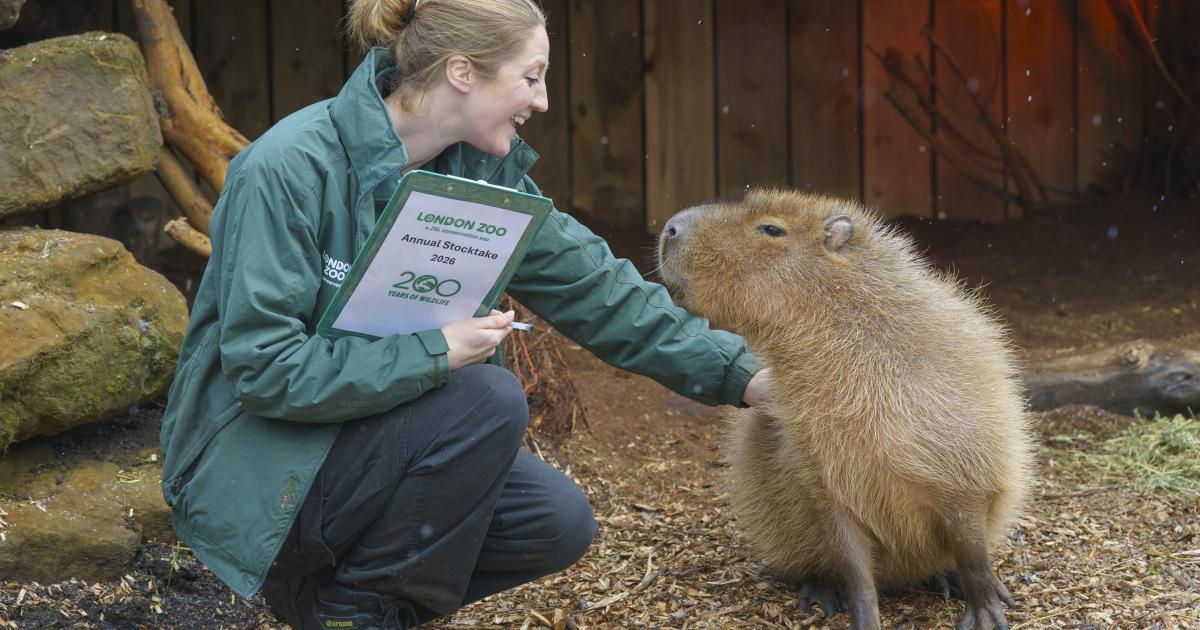
The annual stocktake for 2026 marked the start of ZSL’s 200-year anniversary, counting animals like Humboldt penguins, Asiatic lions, corals, Seychelles millipedes, and capybaras.
Astoundingly, the zookeepers registered a population of 75 Humboldt penguins, which included 16 chicks that hatched in 2025.
This number signifies an outstanding leap for conservation efforts concerning the species, as Humboldt penguins are diminishing in the wild and described as vulnerable on the IUCN Red List of Threatened Species.

ZSL, the charity which runs London Zoo, was established to enhance scientific comprehension of wildlife, an undertaking it has successfully pursued for two centuries.
The annual count performed at the zoo is a mandatory exercise for retaining its licence, and this data is recorded on a global database called ZIMS Species360.
This data is then employed to aid the management of worldwide conservation breeding programs for endangered animals.

Further adding to the count, eight Socorro dove chicks, hatched in 2025, signified a remarkable achievement in the quest to save the species teetering on the brink of extinction.
Classified as Extinct in the Wild, there are just 180 Socorro doves left in the world, cared for by fewer than 50 conservation institutions including London Zoo.
The arrival of the new chicks at the zoo was a significant boost, representing nearly 4.5% of the species’ entire global population.
The population of the zoo’s critically endangered Darwin’s frogs also grew by eight in 2025.

ZSL conservationists, spearheading the global project to rescue the species from the lethal chytrid fungus, hailed the younger frogs’ birth as a landmark.
On a lighter note, the zoo welcomed a novel species in a pair of capybaras, Kiwi and Gizmo.
They were seen huddling together in their heated outdoor shelter while their keeper, Holly, added them to the count.
Find out more about ZSL’s two centuries of wildlife conservation at the ZSL website.