


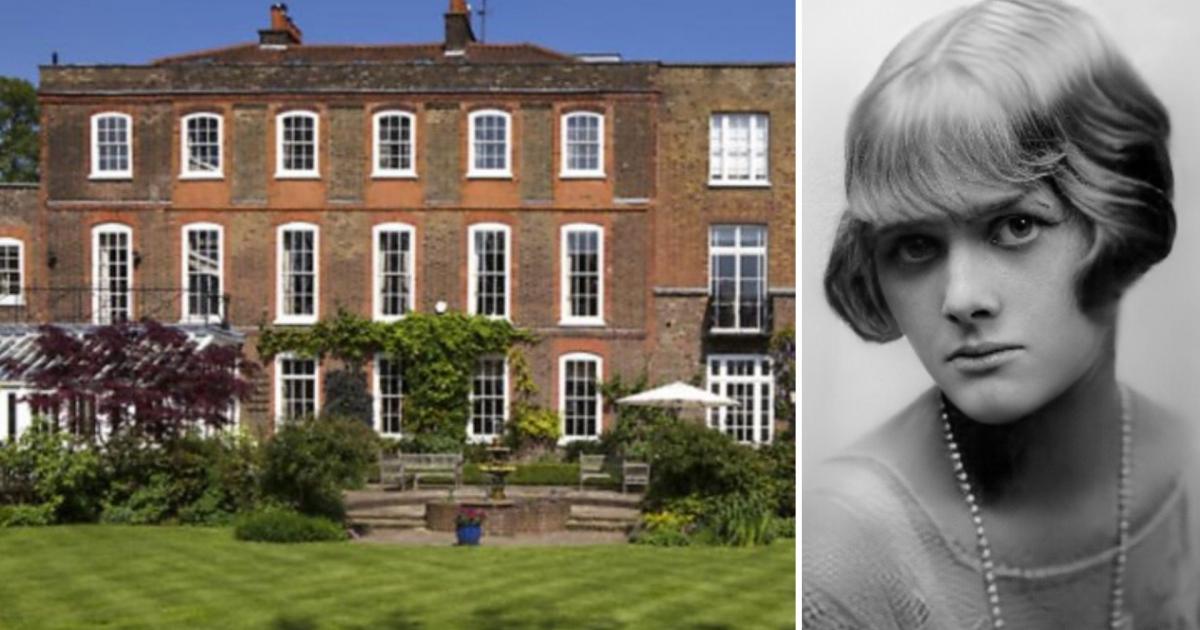
But Cannon Hall in Hampstead can claim links to Rebecca, The Birds, Don’t Look Now, and even Peter Pan.
Although the English Heritage blue plaque on the 18th century mansion is to actor, manager Gerald du Maurier – in a quirk of fate, it is his daughter Daphne who is now more famous.

It was Daphne’s childhood holidays in Cornwall that would become the settings for her hit thrillers Jamaica Inn, Rebecca and a chilling short horror story which was adapted by Alfred Hitchcock into The Birds.
Alongside Rebecca which starred Laurence Olivier and Joan Fontaine, and The Birds featuring Tippi Hedren, du Maurier’s novels Frenchman’s Creek, My Cousin Rachel and short story Don’t Look Now have also made it to the screen.
Sir Gerald was born in Hampstead and grew up in Hampstead Grove – attending Heath House School before taking to the stage.

Known for his naturalistic acting, he made his name originating roles in two plays by J.M Barrie – The Admirable Crichton in 1902, and in 1904 as the first Captain Hook in the West End premiere of Peter Pan, Or The Boy Who Wouldn’t Grow Up.
In fact the Peter Pan creator was close friends with du Maurier’s sister Sylvia after meeting her five sons – George, John, Peter, Michael and Nicholas – while walking in Kensington Gardens with their nurse.
When Sylvia and her husband Arthur Llewelyn Davies died young, Barrie became their unofficial guardian, and turned the stories that he made up for them about pirates and adventures into his tale of Peter Pan.

Sir Gerald lived in Cannon Hall from 1916 until his death in 1934. His relationship with Daphne was said to be close although there were claims from one biographer that he was a violent alcoholic.
Daphne herself stated in her memoirs that because her father had wanted a son – instead of three daughters – she became a tomboy to gain his parental approval.
Flu prevented her from attending his funeral at Hampstead Parish Church, but she did write an affectionate biography Gerald: A Portrait which brought her early fame.
Gerald’s grave can be found in the churchyard at Hampstead Parish Church, alongside Sylvia, Arthur and several of their ‘lost boys’.
After her death in 1989, Daphne’s ashes were scattered off the cliffs near her beloved Cornish home Menabilly – which inspired Manderley in Rebecca.