


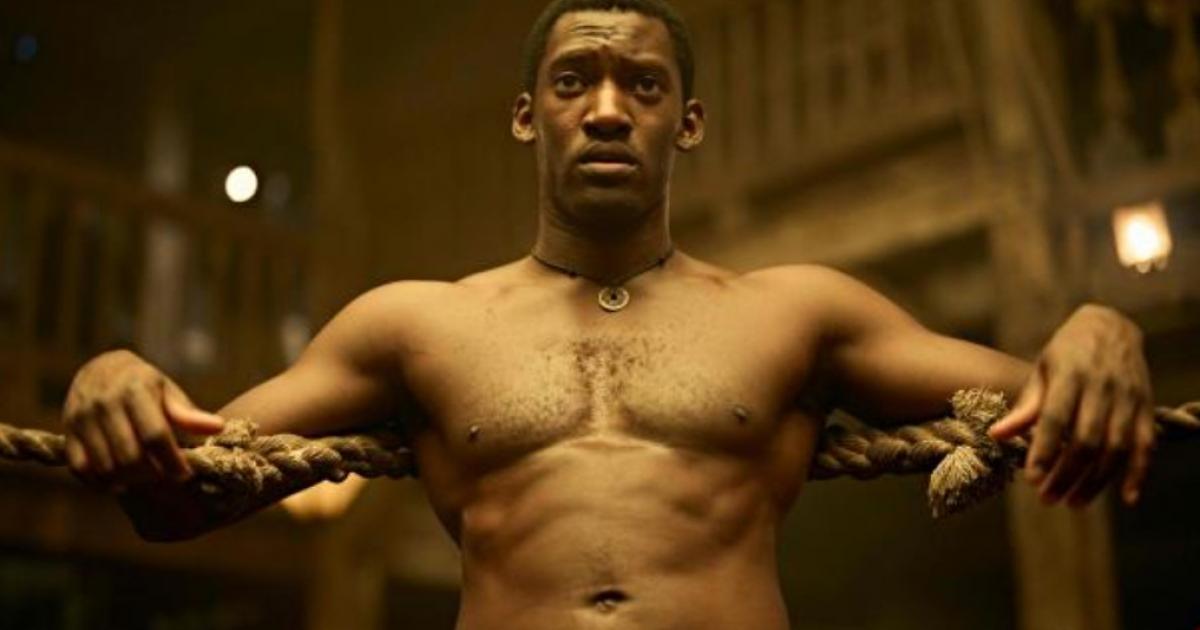
Once again, Season 2, which dropped on Disney + on January 9, follows the fortunes of Malachi Kirby’s Jamaican pugilist Hezekiah Moscow and bare knuckle champion Henry ‘Sugar’ Goodson.
Adolescence star Erin Doherty is also back as Mary Carr, trying to regain her crown as the queen of south London gang The Forty Elephants.

The opening two episodes of six were penned by Stephen Knight (Peaky Blinders, House of Guinness) who is creator, writer and producer on the series.
Stephen Graham’s Sugar is living on the street, estranged from his family after nearly beating his brother Treacle to death.
His journey to sobriety and reunion is a huge part of the plot, as is Mary’s grief over her mother’s death – even as her protegee Alice Diamond (Darci Shaw), rises to power masterminding the theft of a painting and a scheme to trick an American mesmerist (Catherine McCormack).

Also grieving over the violent death of his best friend Alec Munroe, Hezekiah successfully returns to the ring, manages to earn the respect and friendship of a future King of England, and bids to reclaim the land that once belonged to him in Jamaica.
Like season 1, season 2 was filmed on huge sets built at the former Stag brewery in Mortlake, with location shots taking place at Brentford’s Syon House.
But the characters and places that inspired the series are from London’s East End in the 1880s where it was common for pubs to have basic boxing rings and where criminals rubbed shoulders with spectators at nights which blended music, and novelty acts with organised violence.
Henry ‘Sugar’ Goodson played by Stephen Graham
Like Stephen Graham he was just over 5ft 5 in, and a middleweight at 11 stone.
He was born in Seven Stars Yard – now 188 Brick Lane – in 1856 one of 13 children including brother Tom.
He started sparring in East End boxing pubs in the 1870s such as The Five Inkhorns in Shoreditch and the Mile End Gate Tavern.
Nobody knows why Henry fought as Sugar and his brother Tom as Treacle, but they sparred together at The Blue Coat Boy where Punch Lewis put them in charge of the boxing nights.
In 1882 he landed a £100 prize fight against Jack Hicks, 30 years his senior, that went down in sporting legend.
The venue, a disused chapel off Tavistock Square, was raided by police in the third round and he was carted off in handcuffs although later released.
He had three sons with wife Ann and continued to fight into his late 50s before dying in Chingford in 1917.
There are references to him having only one eye – possibly lost after contracting smallpox, and he was arrested several times for bare knuckle boxing which became illegal in 1892.
An obituary described him as a “good fellow if a rough diamond” adding: “Though a useful cut-and-come-again fellow, he never soared to very great heights.”
Hezekiah Moscow
While Malachi Kirby is over 6ft, in real life Hezekiah was a lightweight at 9 1/2 stone and 5ft 5in. He was born in the West Indies around 1852 and arrived in London in 1882, the year that The Illustrated Police News article reports a night at The Blue Coat Boy when a young black man was pushed forward by some of “the boys” and “asked to give an account of himself”.
The report says he could not or would not tell them his name so spectators decided to furnish him with one Ching Hook.
It’s unknown whether Hezekiah had Chinese heritage like his character in the series and no record of him fighting Sugar Goodson, but he did work as a lion tamer and performer at the East London Aquarium, in Bishopsgate where in 1884 he was charged by the RSPCA for “cruelly ill-treating” four bears – a case thrown out by the judge.
He also performed in music hall acts and fought exhibition matches at various pubs including against “champion of the world” Sam Baxter at The Sebright Music Hall, now The Sebright Arms in Hackney.
He won half a dozen fights including at The Metropolitan off Kingsland Road, the Goldsmiths Arms in Clerkenwell and The Blue Anchor in Shoreditch. As the series shows, wealthy spectators would attend these matches as a kind of “poverty tourism.”
In 1890 Hezekiah married Mary Ann in Whitechapel and nine months later they had a baby.
But in 1892 he vanished. Last seen by his wife in March, he failed to appear at a boxing event in early April and in July she posted a notice in The Sporting Life newspaper calling on the boxing fraternity for information on Ching Hook’s whereabouts. She said she was alone had little money and their daughter Eliza was one-year-old.
Years later there was a possible sighting of him working on New York’s docks and looking destitute but that is the last record of him.
Mary Carr played by Erin Doherty
Mary was the queen of women-only syndicate The Forty Thieves from Elephant and Castle and in reality she probably wouldn’t have crossed paths with the East End boxing world.
She was born in Holborn in 1862. By 14 she was convicted of shoplifting and by 19 she was serving time in a penitentiary for fallen women in Kent – her mother was dead and her father a thief.
She may have worked as a Covent Garden flower seller and artist’s model. but by 1890 she was elected queen of the elephants who fenced stolen goods and went pickpocketing and shoplifting in high end shops wearing dresses lined with concealed pockets.
Many were the girlfriends of the male Elephant and Castle gang, and their code included no drinking before a raid, early to bed, a fare share of the proceeds and no stealing each other’s boyfriends.
In 1896 Carr was convicted of kidnapping a six-year-old boy from Epsom races – appearing in court wearing diamond rings and ostrich feathers.
She was sentenced to three years, served time, but was arrested again in 1900 for receiving stolen goods. She later pops up in Manchester posing as Lady Mary Carr at society functions, and is thought to have died in 1924.
Alice Diamond played by Darci Shaw
Alice Diamond was born Alice Black in 1886 to criminal parents in Lambeth Workhouse.
At age 17 she was convicted of stealing from a hat shop in Oxford Street and by 20 she was wearing a set of diamond rings that doubled as a knuckle duster when she punched people.
Although in reality far younger than Carr, the 5ft 8in criminal took over as Queen of the Forty Thieves in 1915 – later renamed the Forty Elephants. Under her rule the gang seriously stepped up their violence and were known for their stylish dress, wild partying and fast cars.
She never married but had a relationship with Elephant gang member Bert McDonald and died in Southwark in 1952.