


Speaking in an urgent question, Alicia Kearns, Conservative MP and shadow Home Office minister, told the Commons on Tuesday, January 13 that the embassy could give the Chinese Communist Party “a launch pad for economic warfare” against the UK.
Referring to a report by The Telegraph, Ms Kearns said: “We know now that they plan to demolish the wall between the cables and their embassy.
“Cables on which our economy is dependent.
“Cables carrying millions of British people’s emails and financial data, and access that would give the Chinese Communist Party a launch pad for economic warfare against our nation.”
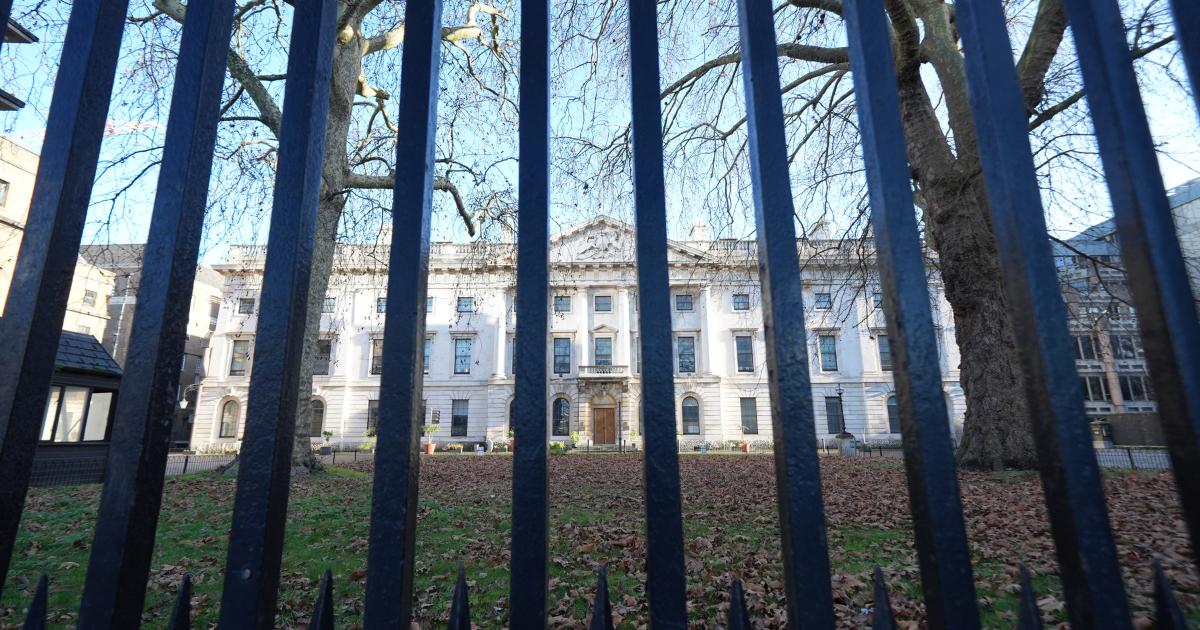
The new embassy is planned for the former Royal Mint site in central London.
According to a report from The Telegraph, the plans include 208 secret rooms and a concealed chamber with hot-air extraction systems, which The Telegraph said suggests a system that could be used for espionage.
Ms Kearns questioned whether any government minister had seen these unredacted plans before The Telegraph uncovered them.
She said asked Matthew Pennycook, the Government’s planning minister if the government planned to approve the embassy thus week and that doing so would “reward” China for holding British national Jimmy Lai in prison.
The Conservative MP also asked if the government had summoned the Chinese ambassador for him to explain the plans.
She said: “The Government can claim today that they had no idea about these secret rooms, and we will take them at that word.
“But they cannot now say they have no power to protect us.
“Protect our economy, protect the British people, deny the Chinese Communist Party their embassy.”
Labour MP Sarah Champion, chair of the Commons International Development Select Committee, echoed security concerns about the project.
Ms Champion said: “Multiple Government agencies and Government departments have raised concerns about this mega-embassy.
“Our international partners have raised concerns about it.
“Every security briefing I’ve had identifies China as a hostile state to the UK.
“I am in no doubt this mega-embassy should not be allowed to go ahead.”
Mr Pennycook, declined to give details about the ongoing planning application, saying it would be “inappropriate” to comment on a live case.
He said: “The Government does not provide a running commentary on planning casework decisions, as you know Mr Speaker, and it would be particularly inappropriate to make any comment on material which has been received.”
He added: “Ministers will take all material planning considerations into account when the final decision is made, and ministers will inform the House of the decision accordingly.”
Mr Pennycook also confirmed that a decision would be made by January 20.
The debate also touched on the historical significance of the site.
Conservative MP Sir Edward Leigh asked whether ministers had insisted on the public having access to a buried Cistercian monastery at Royal Mint Court.
He said: “This site, near the Tower of London where so many prisoners of conscience died over the centuries – who knows?
“Maybe the prayers of medieval monks might finally stop this aberration.”
Labour MP James Naish, who represents Rushcliffe, raised concerns about the wider implications of the embassy.
He said: “The debate about the mega-embassy was ‘not just about a building,’ but about national security and the safety of Hong Kong, Chinese, Uighur and Tibetan diasporas in the UK.”
Mr Naish also sought assurances that the integrity of the planning process had not been compromised, noting: “We’ve learned that, in 2018, (the) then-UK prime minister committed to no delays in granting permission for the mega-embassy, which has an air of predetermination.”
Mr Pennycook responded: “The planning process hasn’t been compromised. We will make a planning decision on the basis of the relevant propriety guidance.”
He said delays were due to “the detailed nature of the representations that have been provided, and the need to give parties sufficient opportunity to respond.”