


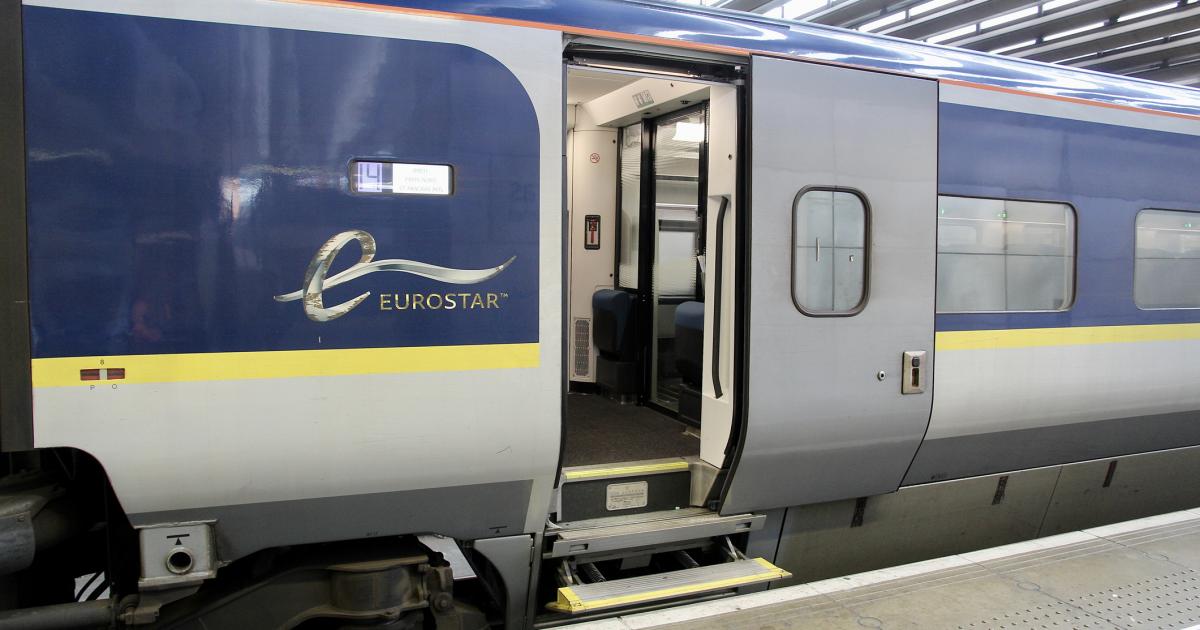
Eurostar has carried 400 million customers since it began running services between the UK and mainland Europe in 1994.
The announcement comes after a record-breaking 2025, with 20 million travellers choosing the cross-Channel service, an increase of 500,000 passengers compared to the previous year.
Gwendoline Cazenave, chief executive of Eurostar, said: “To have welcomed 400 million people on board Eurostar is an incredible moment in our long history of connecting people across Europe.
“Celebrating the milestone with a lucky customer on our Dutch route made it even more special, as we continue to focus our growth efforts on The Netherlands.”
Eurostar surprised its 400 millionth passenger, Amy Gallagher, at St Pancras station in London as she boarded a train to Amsterdam.
She and her partner, Elliot Lipley, were upgraded from Standard to Premier and treated to a complimentary bottle of Champagne Fleury, selected by Eurostar’s head sommelier.
Routes showing the strongest growth included London to Amsterdam, up by 18.3 per cent, followed by London to Brussels at 5.8 per cent, London to Paris at 5 per cent and London to Germany via Brussels at 10 per cent.
The company has set an ambitious target of carrying 30 million passengers annually in the years ahead.
To support this goal, Eurostar announced a €2 billion investment in October 2025 for a new fleet of up to 50 double-decker Celestia trains, built by Alstom.
Eurostar said these new trains, expected to enter service from 2031, will be the first double-deckers to travel through the Channel Tunnel and will offer around 20 per cent more capacity.
The new fleet will enable direct connections to new destinations including London to Frankfurt, London to Geneva and Amsterdam-Brussels to Geneva.
Eurostar has also focused on enhancing its customer and employee experience with recent improvements.
In 2025, the company launched a new uniform designed by Emmanuelle Plescoff, developed in collaboration with employees.
It has also signed a charter to improve rail travel for passengers with autism, including clearer, sensory-sensitive information and improved staff training.