


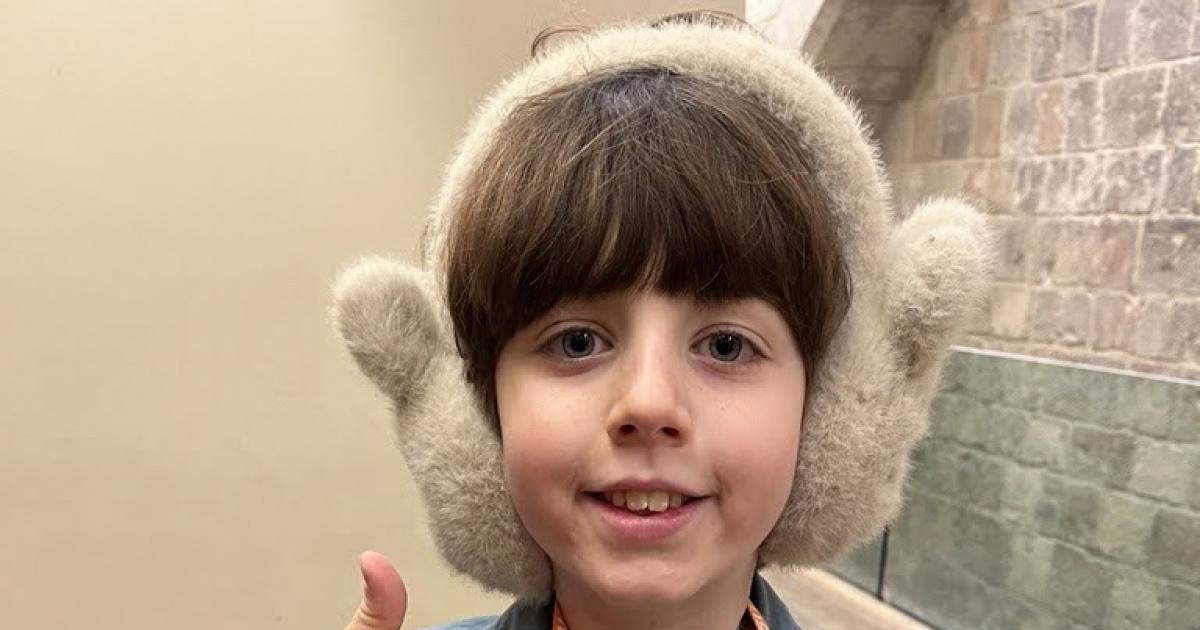
Nine-year-old Hari Owen and his mother, Sarah, travelled to Parliament to make the case for therapeutic play to be fully integrated into children’s health services, sharing their own experience to highlight the benefits.
Hari was diagnosed with leukaemia at age four and underwent two-and-a-half years of treatment, including surgery, chemotherapy and 280 hospital visits.
Despite the gruelling schedule and the trauma of repeated procedures, he received only 17 therapeutic play sessions in hospital and none at home.
His mother, Sarah Owen, who now works as a policy and public affairs officer for Starlight, the UK’s leading charity for play in healthcare, said: “Play was the single most important therapeutic tool for Hari.
“It brought him comfort, helped him cope, and protected him from some of the trauma of what he was going through.
“But it was never guaranteed.
“We had to push for it every time, even though it made such a clear difference.
“No family should have to fight for something that is so fundamental to a child’s wellbeing.”

Therapeutic play helps children understand medical procedures, reduces anxiety, and offers comfort during distressing moments—yet Hari’s access to these vital sessions was inconsistent.
Ms Owen said the lack of support exposed a “postcode lottery” for families in similar situations.
Hari said: “I missed out on so much when I had leukaemia. It took a lot of my life at that time. I missed seeing my friends, going to school and seeing my family.
“Play was something we could do even when I was in hospital and having my treatment, it made everything more fun and much better.
“I could just be myself.”
The family’s story prompted their MP Calvin Bailey, who represents Leyton and Wanstead, to lead a Parliamentary debate calling for therapeutic play to be made a core part of paediatric care across the NHS.
Mr Bailey said: “As well as improving children’s experiences, therapeutic play also benefits the NHS.
“Calmer, better-prepared children are more cooperative during procedures, leading to fewer cancellations, shorter procedure times, and a reduced need for anaesthetics and sedation – saving vital NHS resources and helping to tackle waiting lists.”
He added that too few health play professionals are currently in the system, and those who are, often lack formal recognition as essential team members in paediatric care.
He said: “What Hari had to go through is heart-breaking and unfortunately it is still the reality for many children.
“I’m so pleased to be able to support Hari, Sarah, and all at Starlight with this campaign.”
Starlight has worked with NHS England to develop the Play Well toolkit—national guidelines aimed at embedding health play services into all children’s healthcare settings.
The charity is now calling for government backing, investment in the health play workforce, and a nationwide rollout of these standards.
More than 20 MPs attended the debate, with over half sharing similar experiences from their own constituencies.
Responding to the debate for the Government, Ashley Dalton MP, Parliamentary Under-Secretary of State for Public Health and Prevention, said: “We recognise that play services are integral to paediatric care, not a nice-to-have.
“I stand ready to work with NHS England, with my honourable friend [Calvin Bailey MP] and Starlight to make this a decisive year for children’s health.”