


Bromley’s own Biggin Hill has historically been known as one of the most crucial military bases during World War II, when it was used as the hub commanding RAF planes during the Battle of Britain.
The airport was a sector station of No. 11 Group and lay directly in the Luftwaffe’s sights during the critical summer of 1940.
It was part of many other airfields and among the most heavily attacked during the Blitz, on account of being in the pathway from the Kent coast to London.
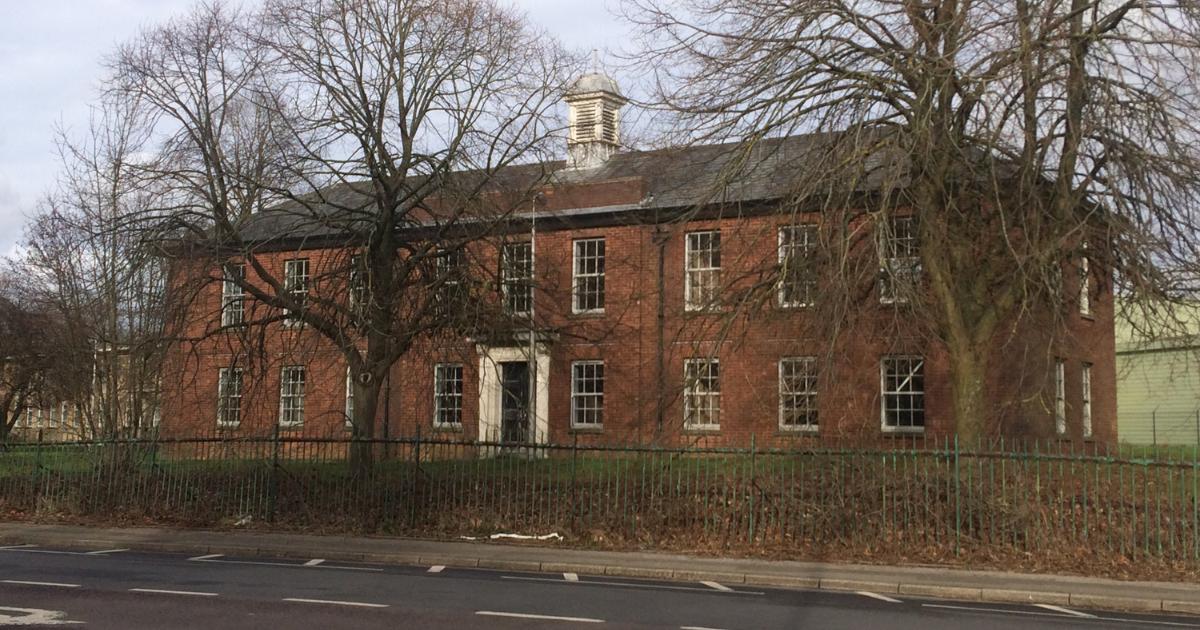
Building 33, the former Station Headquarters, stands abandoned along Main Road at West Camp, despite its very prominent wartime role.
Constructed in 1931, this Grade II listed building is one of 26 Bromley landmarks on Historic England’s Heritage at Risk Register.
Currently the red brick building has been assessed as being in poor condition, with medium vulnerability and a declining trend.
Classified as Priority C, the listing warns of slow decay, with no agreed solution for its future.
The building was erected as part of a major programme to rebuild RAF Biggin Hill in permanent materials during the inter-war years.
It was designed to standard Air Ministry plans and served as the station headquarters – the administrative nerve centre of what would become the most famous fighter station in the world.
Inside, a central hall and staircase led to corridors flanked by double-banked offices, originally housing the Commanding Officer, engineering staff, clerks, accounts offices, lecture rooms and a library.
It was from here that the daily business of a front-line RAF station was managed at a time when Britain’s air defences were rapidly evolving.
The West Camp location where Building 33 is located was devastated by bombing on August 30 1940.
The raid resulted in 39 deaths and 26 injuries, along with severe damage to multiple hangars, workshops and barracks.
But building 33 was the first building in West Camp to be reoccupied after the destruction of the Battle of Britain, standing as a symbol of resilience amid the wreckage of one of Britain’s most heavily bombed airfields.
RAF Biggin Hill opened as a military landing ground in 1914 and became a key component of London’s air defence system during the First World War.
During the 1930s, it played a pioneering role in the development of radar-controlled fighter defence, culminating in the crucial “Biggin Hill Experiment” of 1938, which helped shape the system that would defeat the Luftwaffe.
Biggin Hill was one of the most prevalent air bases with over 1,400 RAF crafts on the site.
Many of the most famous fighter aces of the war flew from its runways, alongside Free French and American Eagle Squadron pilots.
The station remained on the front line throughout the Second World War and into the jet age, before RAF flying finally ceased in 1959.
The RAF withdrew completely in 1992, after which much of the site passed into civilian and commercial use.
Despite its historical importance, Building 33 is now empty and inaccessible to the public.
Ownership has passed to a commercial company, and while much of Biggin Hill’s former married quarters have been sensitively converted to housing, the station headquarters has been left without a clear future.
Externally, the building remains largely unchanged, retaining its original form and detailing.
Internally, original joinery and the staircase survive, but long-term vacancy has had an impact on the integrity of the building.