


Images from Panoramas of Lost London by heritage expert Phillip Davies OBE highlight just how dramatically London, including suburban riverside areas like Woolwich, has changed.
The book features over 300 black-and-white photographs documenting London’s past, capturing its people, buildings and neighbourhoods between 1870 and 1945.
Many of the images come from the former Greater London Council Historic Buildings Division, alongside material from Historic England and the Metropolitan Archives.
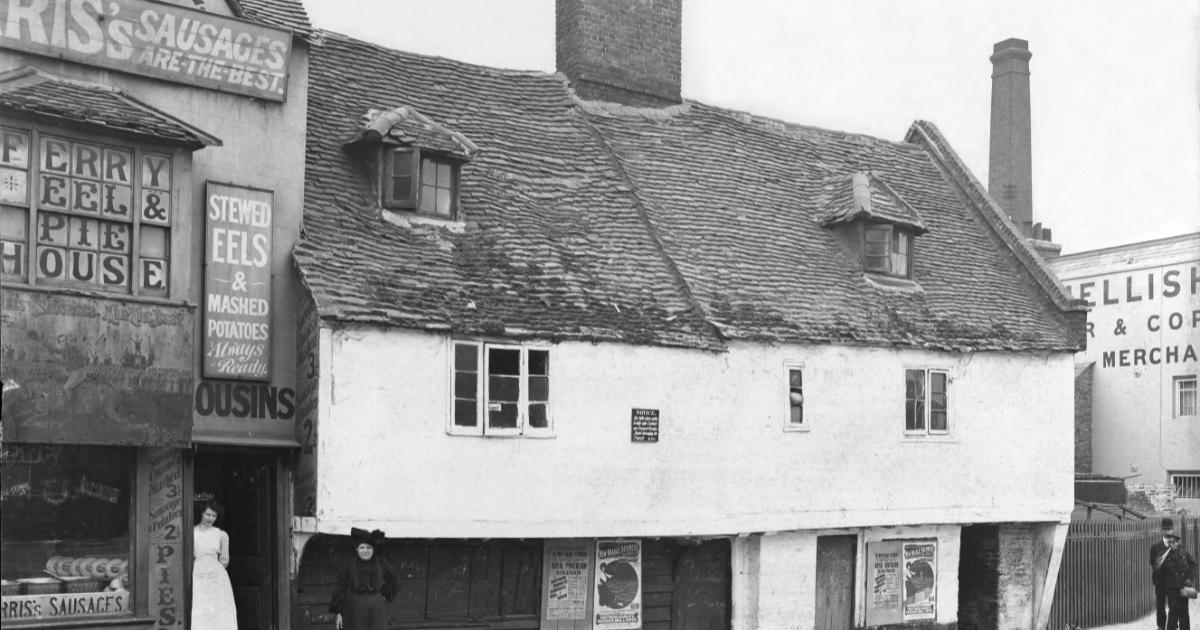
One striking photograph in the book shows 6–7 Nile Street, Woolwich, in the year 1900, back when the street was still called Hog Lane.
The cottages at 6–7 Nile Street were former picturesque timber-framed buildings dating from the 16th century.
They were part of a wider group of ancient buildings on what was then Hog Lane, a narrow riverside street leading down to the Thames.
In the photograph, to the left can be seen the old Ferry Eel and Pie House, with an elegantly dressed proprietress standing in the doorway.
Beside her, an older woman wearing widow’s weeds stands in mourning clothes.
Over her shoulder is a poster advertising steamship trips run by the Woolwich Steam Packet Company, offering journeys to destinations such as Southend, Margate, Ramsgate, Deal and Dover.
But life in Woolwich wasn’t exactly an easy one, as by the late 19th century parts of the old riverside settlement had deteriorated into cramped and impoverished housing.
One of the biggest changes that would completely restructure the Woolwich landscape was the opening of the Woolwich Ferry in the 1880s.
The building of the route meant that many of the older buildings, including parts of Hog Lane/Nile Street, were demolished to create the approach road and ferry terminals for what became the Woolwich Ferry.
By the early 20th century, the once‑ancient cottages were mostly gone, as the former timber-framed buildings were condemned.
On the site of the former historic street, you’ll find Waterfront Leisure Centre, which sits right around where Hog Lane or Nile Street would have been.