


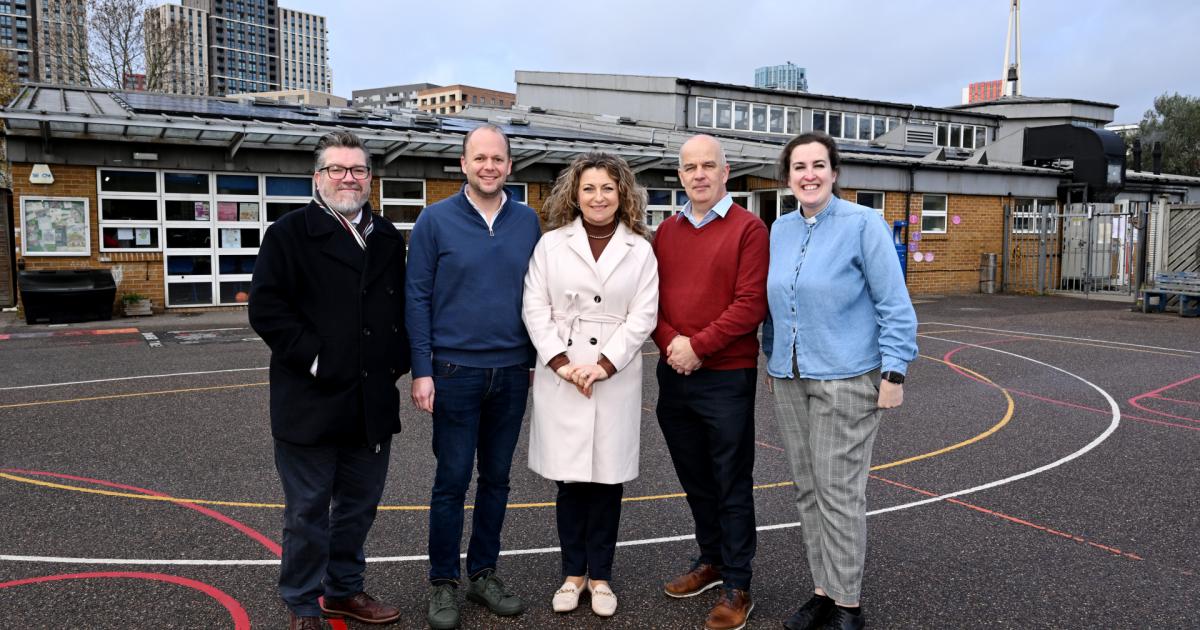
St Luke’s CEVA Primary School has partnered with E.ON Next to install more than 220 solar panels under a ‘solar sharing’ project that directs clean energy to both the school and neighbouring homes.
Using smart metering, the scheme matches on-site solar generation with local household energy use, crediting customers’ bills for the solar power they consume.

Ramona Vlasiu, chief operating officer at E.ON Next, said: “The energy transition is about making an energy system that works for people rather than against them.
“It’s about making energy more affordable and sustainable, and through a combination of technology, innovation, and products, we can empower customers and make energy a force for good.”
The scheme provides discounted electricity to the school, with additional power delivered to the community at a reduced rate.
The panels are expected to produce around 92,000kWh annually—enough to meet more than half the school’s energy needs and the equivalent usage of 34 average UK homes.
Matt Hipperson, headteacher at St Luke’s, said: “This exciting partnership with E.ON partners perfectly with the original trust deed for the school of over 150 years which relates to serving the community.
“The solar panels, alongside E.ON’s technical expertise allows us to use our large roof to help reduce electricity bills for the community we serve.”

The pilot is expected to save the school and its community more than £6,500 per year.
Ms Vlasiu said: “There are more than 20,000 primary schools across the country, not to mention the potential of other schools, universities, public buildings, and car parks, so the opportunity to turn these into clean energy hubs that support their communities is enormous.”
However, E.ON said current regulations are a barrier to scaling up such projects.
The company is calling on the government and energy regulator to support community energy schemes like this one by updating regulations and policy costs.