


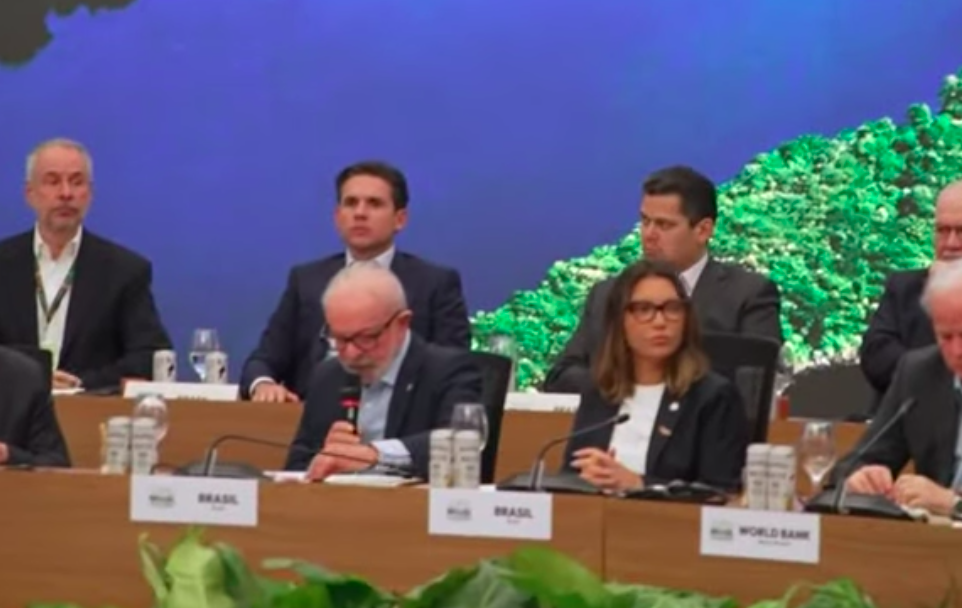
The result was a COP where the foes of ambition were emboldened, its proponents frustrated, and in which countries which could have shown leadership, such as China and India, refused to step up.
Mike Buckley is the director of the Independent Commission on UK-EU Relations and a former Labour Party adviser
A lost opportunity
COP30 was meant to be a game changer. Hosts Brazil framed the event as the “COP of Truth”, a pivotal moment in which years of negotiation would come to fruition in ambitious, meaningful roadmaps to cut fossil fuel use and deliver on climate finance, deforestation, and Indigenous rights.
Yet despite the efforts of COP30 president, André Corrêa do Lago, to deliver, the final agreement – dubbed the Global Mutirão (or ‘collective efforts’) – offered merely a non-binding “mechanism” to help ensure a “just transition”, and a set of measures to track climate-adaptation progress.
Even the most welcome development – a commitment from wealthy nations to triple the amount of money to help poorer nations adapt to the effects of climate change – remains inadequate given it will only be reached in 2035, five years later than developing nations wanted.
No-one left COP30 believing enough had been done to keep the world on track to keep global temperatures below 1.5C or even the higher ‘safe’ limit of 2C above pre-industrial temperatures.
“Cop30 gave us some baby steps in the right direction, but considering the scale of the climate crisis, it has failed to rise to the occasion,” warned Mohamed Adow, director of the Power Shift Africa thinktank.
Corrêa do Lago admitted his frustration at the lack of delivery. The consensus nature of the talks “slow down action,” he said. A single, obstructive nation could block discussions, or a group of countries would block progress by repeating long-held, often valid, positions.
None of this was a surprise. COPs are by design global gatherings where decisions are made by consensus, not by majority vote. The hope has been that by keeping all countries on side meaningful, ambitious global progress can, eventually, be made.
But COPs are not divorced from geopolitical or economic realities. The US is led by a man who denies the climate crisis exists. Russia is at war with Europe and survives economically by selling fossil fuels. Saudi Arabia and others are also dependent on selling such fuels, and have no intention of giving up yet. They may not deny the science, but they refuse to bow to it.
Michael Jacobs, a veteran of climate diplomacy, described this group as an “axis of obstruction” which is creating “an increasingly bitter conflict at the heart of global climate politics between those who accept that the world must wean itself off fossil fuels; and those who are actively resisting in pursuit of short-term energy interests”.
The result was a COP where the foes of ambition were emboldened, its proponents frustrated, and in which countries which could have shown leadership, such as China and India, refused to step up.
COP sceptics have long argued that consensus offers only a road to ruin – a guarantee that a small number of nations will always pull the handbrake even as a majority seek speed and ambition.
Perhaps the sceptics have finally won, as the end of COP30 saw the beginning of an independent coalition of the willing, a group of nations ambitious to go further and faster to cut emissions, protect forests and provide essential climate finance to enable poorer nations to both adapt to the climate crisis, and to invest in renewable technology to curb their own emissions.
Corrêa do Lago, unwilling to walk away, will divorce his ambitious roadmap plans from the COP and UN process, establishing them on a voluntary basis outside the formal UN regime. Brazil, he said, would spend the next year overseeing two separate road map initiatives, each for fossil fuels and deforestation. He nonetheless hoped the outcomes would be adopted at a future COP.
He also announced a trade and climate body independent of both the UN climate process and the World Trade Organization to deal with tensions fuelled by measures such as the EU’s pioneering carbon border tax, which comes into effect in January.
The Netherlands and Colombia will separately host what is being billed as the first international conference on the transition away from fossil fuels in April.
Fragmentation: friend or foe?
The hope is that a more fragmented process enables swifter action towards emissions reductions, greater help for developing nations to invest in renewable energy and climate adaptation, and more protection for forests, other biodiversity and indigenous peoples.
Under new leadership or fearing diplomatic, trade or economic isolation ‘petrostates’ like the US, Russia and Saudi Arabia may eventually come onside. Given their size and – in particular for the US – their influence, a long term solution without them seems all but impossible.
But ambitious nations must also work with COP30’s third group of countries, which may hold the key to a step change in progress on emissions and adaptation.
This third group are neither blockers nor opposed to multilateral action, but are unified by a belief that their country’s needs are not addressed in current climate plans. These are mostly middle- and low-income countries, acutely aware of extreme weather and the climate crisis, but just as aware that they must balance their need to develop with climate action.
They believe their call for adequate climate finance from the world’s rich nations, for tariff removal on green technology, and for technical assistance to enable them to grow sustainably, has not been heeded. Their refusal to join with ambitious nations in building roadmaps is not so much a refusal to act – but a protest at what they see as unfair treatment.
They are also ambitious to develop, and to do so as quickly and cheaply as possible. Struggling with debt, low investment and the politics and expense of lifting people out of poverty, even though renewable technology is proven and available, for many governments fossil fuels are still more readily available and swiftly brought online, and hence offer the quickest route to development.
India’s environment minister Bhupender Yadav summed up their frustration: Climate finance, he said, must be counted in “trillions, not billions”, and rich countries need to bring forward their own net zero dates instead of lecturing others.
Small island states and least developed countries, meanwhile, have received almost none of the money they were promised. A recent UN assessment found that only around 1% of global climate finance reached small island developing states over the last decade.
In addition, affordable, accessible climate technology must be free from restrictive intellectual property barriers, argues Yadav. Only with adequate finance and access to renewable technologies free of excessive licence payments or tariffs can the world move to net zero quickly, sustainably and fairly.
A way forward
What happens next will depend on whether the ambitious bloc — especially the UK, EU, Canada and Australia — recognises that the middle group holds the key to unlocking real progress. These countries are not resisting climate action; they are demanding fairness.
That means climate finance must be delivered, and the 2035 date brought forward five years. It means opening access to clean technology, easing debt burdens, reforming trade rules and investing at scale in renewable infrastructure. It means recognising the deep links between the climate transition and international development; for some nations, including the UK and Germany, it will mean a recommitment to development as a policy priority.
If the UK and EU lead a genuine partnership with this third group — listening to their priorities and matching ambition with resources — the coalition for action will grow dramatically, enabling swifter progress and isolating the remaining petrostates. By COP31, a far broader, more united front could finally start driving the urgent transition the world needs.
Left Foot Forward doesn’t have the backing of big business or billionaires. We rely on the kind and generous support of ordinary people like you.
You can support hard-hitting journalism that holds the right to account, provides a forum for debate among progressives, and covers the stories the rest of the media ignore. Donate today.