


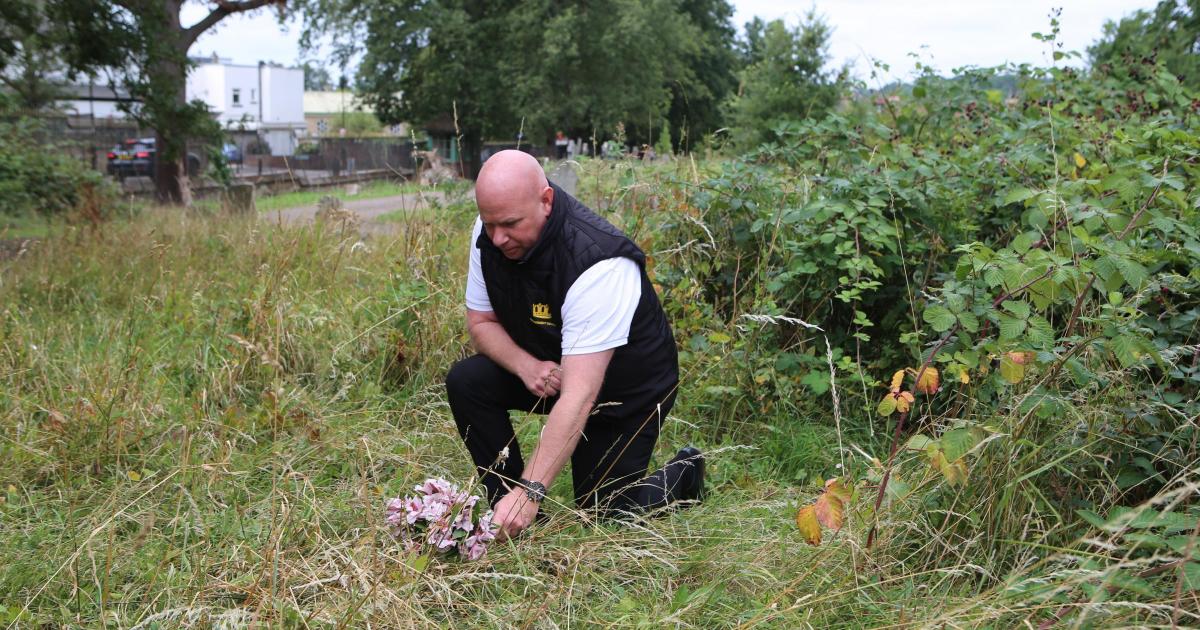
The 23 servicemen, and one woman who served in the Women’s Royal Air Force, all died shortly after returning home from battle and were all buried in “pauper’s graves” at Ladywell and Brockley Cemetery in Lewisham.
Pauper’s graves are unmarked, public burial plots which were common at the time because of the large number of casualties after the war and families who were unable to afford their own memorial for a loved one.
Researchers at the Commonwealth War Graves Commission (CWGC) have been working with Bereavement Services at Lewisham Council to look into death records, widows’ pension records and old maps of the cemetery layout to help track down the exact locations of the unmarked graves.
The Friends of Ladywell and Brockley Cemetery (FoLBC), a group of around 300 dedicated volunteers who work hard to maintain and preserve the cemeteries, have also been involved in the efforts to uncover the forgotten lives of those who are buried there.
CWGC researchers had contacted the council as they were initially researching four soldiers from World War One. Council staff from Bereavement Services then worked to look through grave and death records and shared information with CWGC to help with research.
After figuring out where the graves were based using markers and old plot maps of the cemetery, they discovered there were even more soldiers in one of the areas under study.
Cllr Oana Olaru-Holmes, Cabinet Member for Safer Lewisham, Refugees and Equalities at Lewisham Council, told the Local Democracy Reporting Service (LDRS): “We are always happy to work with CWGC and are proud to support their work by giving our officers’ time to support the research.
“This is an ongoing project over the next 12 months.
“We now have approval for [23] war graves. We will also be working with CWGC to plan the installation of the graves. The speaker will then be in attendance to officially mark the memorials of these forgotten and fallen.”
During their research, the council and CWGC discovered that two sets of soldiers share a grave.
They will be commemorated and will share memorials.
Cllr Olaru-Holmes said once the new headstones are installed, the names of the located soldiers will be removed from the wall memorial at Hero’s Corner, in line with CWGC guidance that individuals cannot be commemorated twice.
She added: “Restoration of the existing wall memorial will take place at the same time, ensuring that all soldiers, including those still without known graves, continue to be remembered. It’s been a collaborative effort, our Bereavement Services team, FoLBC and the CWGC have worked tirelessly to uncover these forgotten histories.
“Bereavement Services will use the new collaboration channels to support future requests and will ensure there is always room for soldier searches beyond this project. We work hard to remember and commemorate our heroes.”
Lewisham Council has shared the names of the soldiers with the LDRS. They were first publicly read out by Deputy Mayor of Lewisham, Cllr Louise Krupski, during the Remembrance Sunday Service on November 9.
Using CWGC’s online records and information from websites including the Imperial War Museum, London Remembers and Lewisham’s Local History and Archives Centre, the LDRS has tracked down further details for most of the soldiers who are set to be commemorated, including their regiment, ranks and the exact date they died.
Three of them had significantly more information available.
Phyllis Purdy was born in 1893 in Hastings and was the eldest of nine children. According to the 1911 census, Phyllis was working as a “needlewoman” in Anerley in Penge.
She became a member of the Women’s Royal Air Force when it formed in 1918. On December 8, 1918, Phyllis died at the age of 25 from pneumonia and exhaustion at the Union Infirmary in Greenwich.
At the time of her death, Phyllis’ home address was registered in Brockley. She was buried on December 13, 1918 in Plot Z, Grave 313 in Ladywell and Brockley Cemetery.
William Jackson was born in 1883. He married Mary Ann Gould in Camberwell in 1905 and together they had five children.
He was recorded in the 1911 census as living in Brockley with his wife and two of their eldest children. At the time he was working as a carman.
William joined the army on July 29, 1916 where he served as a Private with the Queen’s Royal West Surrey Regiment and later transferred to the Labour Corps.
According to the Local History and Archives Centre, William was discharged on April 24, 1919 because he was no longer physically fit for service, having suffered from rheumatic fever and a dilated heart. He died on June 3, 1920 at the 4th London General Hospital at the age of 37. He was buried in Plot Z, Grave 331 at Ladywell and Brockley Cemetery.
Before World War One, Charles Gerhardt had previously served in the 3rd Battalion of the East Surreys. Lewisham’s Local History and Archives Centre states that he joined the regular army and was posted to the Royal Garrison Artillery.
He was discharged in February 1913 but re-enlisted when the war broke out, where he served as a Private in the Royal Defence Corps.
Charles was married to Winifred Gerhardt and they lived in South Bermondsey. Before World War One he reportedly worked as a stevedore, a labourer who loads and unloads cargo from ships.
He died on April 5, 1921 at the age of 37. He is buried in Plot Z, Grave 390 at Ladywell and Brockley Cemetery.
Other soldiers who will receive their own headstones include:
- B Davis, Plot Z, Grave 44 – Served as a Sapper for the Royal Engineers who died on October 12, 1920, age unknown
- Thomas B Wright, Plot Z, Grave 368 – Served as a Driver for the Royal Engineers who died on July 27, 1919, aged 24
- Henry Charles Winder, Plot Z, Grave 198 – Served as a Private in the London Regiment, Royal Fusiliers who died on October 22, 1916 at the age of 24
- Owen Stanley Curtis, Plot Z, Grave 360 – Served as a leading telegraphist in the Royal Navy, HMS Victory who died on June 4, 1920, aged 26
- T Fung / Funge, Plot Z, Grave 245 – Served as a Private for the Northamptonshire Regiment and later transferred to the Labour Corps who died on October 21, 1917, age unknown
- L G Sheldrake, Plot Z, Grave 387 – Served as a Private in the Royal Sussex Regiment who died on October 22, 1920, aged 40
- Reuben Harvey, Plot Z, Grave 331 – Served as a Private in the Oxford and Bucks Light Infantry, Third Battalion who died on May 15, 1920, aged 49
- Alfred James Hoare, Plot Z, Grave 19 – Served as a Gunner in the Royal Field Artillery who died on December 1, 1919, aged 27
- William Smith, Plot Z, Grave 261 – Served as a Private in the Royal Army Service Corps who died on December 2, 1919, aged 48
- Arthur Robert Whithead, Plot Z, Grave 261 – Served as a Private in the 14th Battalion Welsh Regiment who died on December 7, 1919, aged 30
- Walter Lake, Plot Z, Grave 188 – Served as a Gunner for the Royal Garrison Artillery who died on July 13, 1916 aged 38
- Harold T Mann, Plot Z, Grave 361 – Served as a Private for the County Yeomanry and then the Middlesex Hussars who died on May 16, 1920, age unknown
- Edward Smith, Plot Z, Grave 369 – Served as a Gunner in the Royal Field Artillery who died on June 6, 1919, aged 27
- W J Franklin, Plot Z, Grave 260 – Served as a Private in the Royal Defence Corps who died on January 16, 1920, aged 41
- E Southwood, Plot Z, Grave 291 – Served as a Bombardier in the Royal Field Artillery who died on February 10, 1918, aged 25
The following soldiers will also receive their own headstones, however there is little information about where they served online:
- D Bruce, Plot Z, Grave 320
- J French, Plot Z, Grave 284
- J Hoare, Plot Z, Grave 210
- W W Rawson, Plot Z, Grave 307
- Edward Charles Winder, Plot Z, Grave 316
The council told the LDRS that one of the graves, Plot Z, Grave 101, has two other soldiers buried in it. This grave contains a World War One soldier listed as Foxwell, and another soldier called Leslie Charles Foxwell, who served as a Sergeant in the Royal Air Force during World War Two – he currently has his own headstone.
Leslie Charles Foxwell died on September 7, 1942, aged 20 when his Spitfire aircraft accidentally collided over the English Channel in mid-air with another Spitfire which was being flown by Pilot Officer Horace Harwood, who also died in the incident.
Leslie Charles Foxwell is the only one of the 25 names not on the screen wall because he served in the Second World War and has his own headstone. The LDRS understands the two Foxwell soldiers will be commemorated under the same memorial when the changes are made.
If someone believes they may be related to any of the names, they can visit the CWGC website appeals page and can email enquiries@cwgc.org
A spokesperson for CWGC said: “The Commonwealth War Graves Commission is a world leader in commemoration and in the UK alone, there are Commonwealth War Graves at around 12,500 sites.
“We work closely with local authorities and landowners up and down the country to care for the graves of the fallen. At Ladywell and Brockley Cemetery, we have commemorated 24 casualties on a screen wall for many years, as their individual graves have been inaccessible.”
They added: “Therefore we are delighted to be working with Lewisham Council on this project and, though this is still in the early stages, we look forward to being able to mark these casualties’ individual graves once more.”
A spokesperson for the Friends of Ladywell and Brockley Cemetery said: “The FoBLC Committee is delighted to have been able to work with Bereavement Services and the CWCG on this issue.
“Our charity is dedicated to caring for and improving all aspects of the two cemeteries. We are pleased that our views on how to develop and care for this area of Brockley Cemetery have been taken fully in to account and our members will contribute to maintaining the area around the new headstones as a wildflower meadow to be enjoyed by all in the future.”