


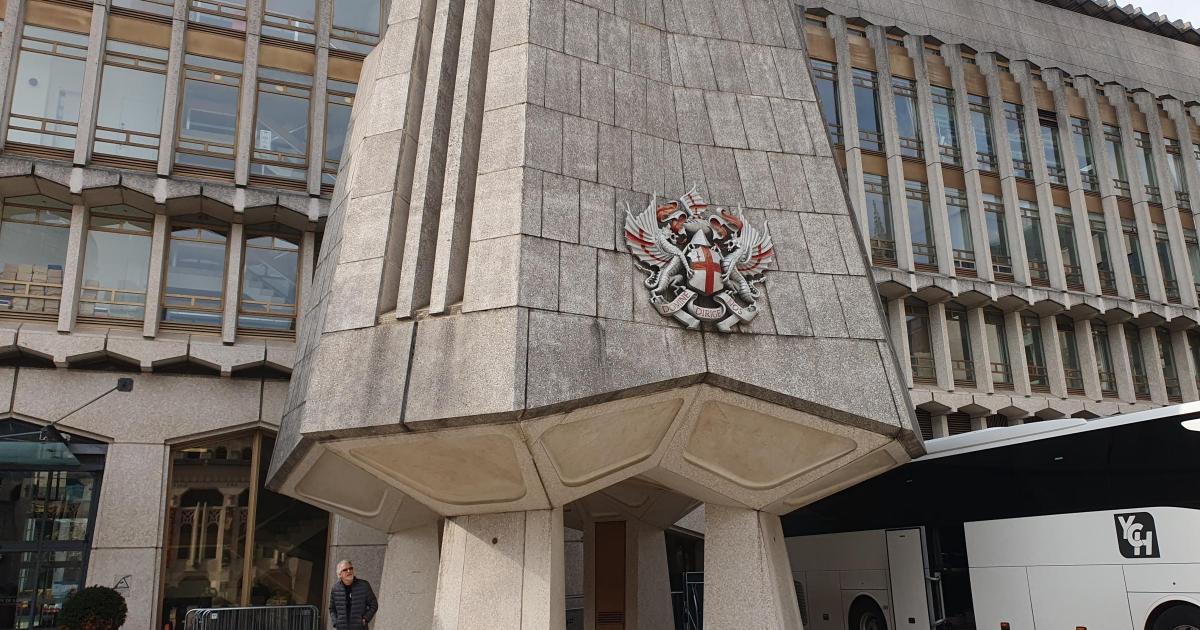
According to analysis carried out by the Local Democracy Reporting Service (LDRS) across more than 70 committee meetings in September and October almost 40 per cent of the items listed were to be discussed behind closed doors.
Among these was a decision due yesterday (December 8) about the leases of five cafes including Parliament Hill Lido, Queen’s Park, and Highgate Wood that were put out to tender earlier this year.
Campaigners fear the process could swap long-standing independent operators for large chains – and have won support from actors Benedict Cumberbatch and James McAvoy, rocker James Righton, and columnist Giles Coren.
The Ham & High understands that yesterday’s meeting heard a verbal overview but the decision was made behind closed doors and will be communicated to the people who tendered for the leases and existing cafe owners.
The City of London Corporation manages several open spaces in and around London including Hampstead Heath, Highgate Wood, Epping Forest and Wanstead Flats.
Alderwoman Martha Grekos, who has previously raised concerns about transparency at the Corporation, said in her experience it “is too focused on its own interest to recognise the public interest”.
A spokesperson for the Corporation said it is “fully transparent and accountable” and that any suggestion otherwise is “unfounded”. They added the “vast majority” of its business is held in public, and that when reports are discussed in private “it is fully lawful and done so to protect sensitive information”.
The corporation is distinct from most UK councils with responsibilities extending beyond those of typical authorities. While it provides local government services, its remit also includes managing significant green spaces, acting as the capital’s Port Health Authority, and being the trustee of the City Bridge Foundation.
From a governance perspective it is also unique, with its own government, own Lord Mayor and independent police force.
One of the impacts of having such an array of unique responsibilities is that the Corporation often has to discuss issues in committee meetings which are not suitable for the public eye. There is typically an item in which a motion is proposed to exclude the public due to “the likely disclosure of exempt information” as defined in the Local Government Act.
This has however led to concerns about the extent to which this is deployed, with key decisions such as the withdrawal from running Smithfield and Billingsgate markets and funding for the Barbican Centre taken without the public present.
To get a sense of how often this occurs, the LDRS reviewed committee meetings held in September and October.
All items, other than the motion to exclude the public, were counted, including those which are simply administrative such as ‘apologies’ and those listed as ancillary to substantive issues. Meetings that were either cancelled or inquorate were also discounted.
By the LDRS’ estimations, in September and October there were 1,096 items down to be discussed, of which 678 were to be included in public session and 418 in private. This equates to almost 62 per cent in public with the remaining 38 per cent behind closed doors.
Committee meetings which had a notably large number of private items included policy and resources, the pensions committee and the civic affairs sub-committee.
To give an indication as to how this compares to typical councils, which admittedly do not have the responsibilities the corporation has, in September and October neighbouring Westminster had just three items held in private.
Two of these related to discretionary housing payments and one National Non-Domestic Rates (NNDR) Discretionary Relief and Hardship Relief applications. The council did, however, restrict certain documents, such as some of those associated with licensing applications.
At a recent finance committee meeting Alderwoman Grekos challenged an item on the Corporation’s investment in social housing which was to be discussed in private session.
Alderwoman Grekos argued it was an “inappropriate use of non-public session” due to the significant interest in the condition of the Corporation’s social homes, such as those on the Golden Lane Estate.
When put to a vote the majority of the committee opted to keep the item in private with a paper due to be made public once it comes to the Court of Common Council in December.
Deputy Beth Coombs, a colleague of Alderwoman Grekos in the Castle Baynard ward, was the only member to side with her and vote to take it into public session.
Alderwoman Grekos told the LDRS that the corporation is able to take the public interest into account and decide that items due to be discussed privately should be heard in an open session. However she claims she’s not aware of a single case where this has happened.
She added: “In my experience, the City of London Corporation, with its culture of non-transparency, is too focused on its own interest to recognise the public interest.”
Another source told the LDRS: “The number of reports and information placed into the non-public section of the City’s agenda has been a long and ongoing issue, which members have constantly and consistently raised.
“Far too many items are discussed behind closed doors instead of in the public domain, especially housing reports. It’s very understandable why tenants and leaseholders have concerns; democracy and trust are based on transparency and openness, even more so when these issues directly affect them.”
A spokesperson for the City of London Corporation said: “We are fully transparent and accountable. Any suggestion otherwise is completely unfounded. The vast majority of our business is conducted in public, reflecting our open democratic processes.
“Unlike traditional local authorities, our responsibilities go far beyond a typical borough, covering commercial, statutory, and voluntary sectors across the capital and beyond. When reports are considered in private, it is fully lawful and done so to protect sensitive information – including personal data, commercial details, or legally privileged matters.
“These sessions comply with relevant legal requirements to safeguard confidentiality and ensure decisions are fair, informed, and lawful.”