


Unlock the Editor’s Digest for free
Roula Khalaf, Editor of the FT, selects her favourite stories in this weekly newsletter.
The City of London is encouraging top bankers, lawyers and executives to push positive messages about the UK to counter rising disinformation about crime that threatens investment in Britain.
The intervention comes amid a sharp increase in the amount of social media posts spreading fake or misleading news that is fuelling false narratives about safety in the country, including claims that the capital has become dangerous and lawless.
The government, police and cyber experts have already expressed alarm about the creeping spread of disinformation, but the City has now waded in amid fears the proliferation of negative social media is causing concern among overseas investors in Britain.
At a recent Mansion House meeting, chief executives from some Arab banks raised their concerns about crime in London and questioned if the was a safe and welcoming place for business, according to two sources present.
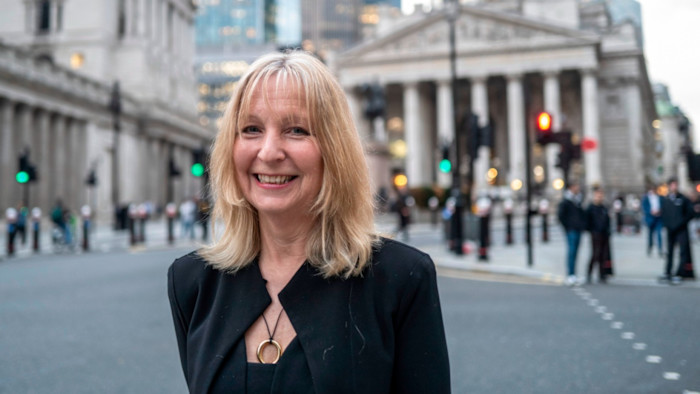
Dame Susan Langley, the Lady Mayor of the City of London, told the FT that she would use her convening power to correct disinformation and was urging bosses, bankers and lawyers to actively tackle the falsehoods when meeting investors and overseas peers.
The soft power campaign to encourage the City to take an active role in correcting untruths about London will include key lines and messages being circulated to executives that they can use in meetings.
“We need to push back firmly against disinformation and be by much more proactive with the City’s narrative,” Langley said.
“It’s not right that our position is unfairly undermined on the world stage. London is a global leader — statistics show that it is one of the safest and best places in the world to invest, work and live. The City and the financial and professional services sector must stand up and tell the story of our success, stability and innovation.”
A wave of social media posts on platforms such as Instagram, Nextdoor, Reddit and X, have helped to spread false claims that London has descended into lawlessness with AI deepfake videos appearing to show concerned citizens sharing crime stories.
US President Donald Trump has also falsely claimed that London has “no-go zones” that even police cannot enter and has suggested parts of the capital are governed by sharia law.
The narrative is in contrast to statistics published on Monday that show the city’s homicide rate is the lowest on record, far below other global peers such as New York. Across England and Wales, violent crime is also at a 30-year low.
However, other crimes have increased including more than 117,000 phone thefts reported in London in 2024 and 27,167 in the first three months of 2025, according to the Met’s figures. However, other crimes have increased: more than 117,000 phone thefts were reported in London in 2024 and 27,167 in the first three months of 2025, according to the Met’s figures. Shoplifting rose to a record high of 94,783 incidents recorded in the year to the end of June 2025, 38 per cent more than the previous year. Last year, the police launched a specific task force to tackle theft in West End hotspots.
Meanwhile, fears about so-called “Rolex rippers” have also grabbed international attention with the Met’s most recent figures showing 4,382 luxury watches were stolen between January 2022 and February 2024.
Emily Thornberry MP, chair of the Foreign Affairs Committee, said last week during a panel discussing the undermining of democracy that there did “seem to be some form of organised undermining of our capital city”.
Mark Hill, a lecturer in cultural computation at King’s College London, has analysed social media accounts on Reddit and found a recent acceleration in the number of posts framing London as “dangerous”.
Hill said that the nature of algorithms, user engagement and repetition of emotionally triggering topics could make a “narrative feel widespread”.
“Perceptions formed online influence behaviour offline, be that how one votes or where they invest,” he added.
The government has started to be more open about the risks of disinformation as a tool of malign state and non-state actors.
Foreign Office minister Stephen Doughty told MPs at the select committee there was a “spread of armies of bots flooding social media with lies, deepfake videos and fake news sites” which he described as “information warfare”.
He said the government was now focusing on what it calls “propaganda mills” and sanctioning those responsible.
Rebecca Harding, chief executive of the Centre for Economic Security, said that disinformation campaigns were an “attack on the government’s economic agenda because they are designed to undermine confidence in the UK which spooks investors.”
The government has said that business investment in the UK is at a 20-year high.